
讲师
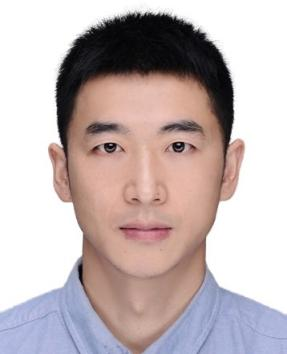
杨东
籍贯:四川
职务:
职称:讲师
研究方向:教育技术、STEM教育、学习心理
邮箱:dydyor@bnu.edu.cn
教育教学
本科生课程:《教育心理学》、《现代教育技术》
科学研究
- 主持项目:
- [1]. 广东省高等教育学会 “十四五”规划2024年度高等教育课题:《广东省高校教师技术压力形成机理与消减策略研究》(2024-2026)
- [2]. 2024年广东省教育科学规划课题(高等教育专项):《生成式人工智能促进职前教师学习投入的略研究》(2024-2026)
- [3]. 北京师范大学珠海校区深入实施“优师计划”师范生培养工作专项:《人工智能教学应用通识课程建设》(2024-2025)
- [4]. 广东省哲学社会科学青年课题:《人工智能赋能视角下中小学教师技术压力研究:形成机制与干预措施》 (2025-2027)
- 发表论文:
- [1] Chen, P., Yang,D.*, & Lavonen J.(2023).Computational thinking skills through unplugged activities: A Systematic Review and Meta-analysis. Int. J. STEM Educ. 10(1):1-25;
- [2] Chen, P., Yang, D.*, Lavonen, J., Metwally, A. H. S., & Tang, X. (2024). How do students of different self-efficacy regulate learning in collaborative design activities? An epistemic network analysis approach. Front. Psychol., 15, 1398729.
- [3] Fu, P., Gao, C., Chen, X., Zhang, Z., Chen, J., & Yang, D.*. Proactive personality and its impact on online learning engagement through positive emotions and learning motivation. Sci Rep 14, 28144 (2024). https://doi.org/10.1038/s41598-024-79776-3
- [4] Metwally, A.H.S.; Tlili, A.; Wang, Y.; Li, Z.; Zhao, J.; Shehata, B.; Yang, D.*; Huang, R.(2024). How do Chinese and Egyptian science textbooks differ? A cross-country comparative research. Heliyon, 10, e32380.
- [5] Wang, H., Tlili, A., Huang, R., Cai, Z., Li, M., Cheng, Z., Yang, D., Li, M., Zhu, X & Fei, C. (2023). Examining the applications of intelligent tutoring systems in real educational contexts: A systematic literature review from the social experiment perspective. Educ. Info. Technol. 28(7), 9113-9148.
- [6] Wang, S., Yang, D*., Shehata, B. (2023). Exploring effects of intelligent recommendation, interactivity, and playfulness on learning engagement: An application of TikTok considering the meditation of anxiety and moderation of virtual reward. Comput. Hum. Behav., 149, 107951.
- [7] Yang, D.*, Cai, Z. & Huang, R. (2022). Not all engaged students are alike: Patterns of engagement and burnout among elementary students using a person-centered approach. BMC Psychol. 11(1): 38
- [8] Sang, G., Wang, K., Li, S., Xi, J., Yang, D. (2023). Effort expectancy mediate the relationship between instructors' digital competence and their work engagement: evidence from universities in China. Education Tech Research Dev. 71(1), 99-115.
- [9] Yang, D.*, Wang, H., Saleh Metwally, A., Huang, R. (2022). Student engagement during emergency remote teaching: A scoping review. Smart Learn. Environ. 10(1): 1-17
- [10] Yang, D*., Lavonen, M. J., & Niemi, H. (2018). Online learning engagement: Critical factors and results-evidence from literature. Themes in eLearning, 11(1), 1-22
- [11] Yang, D.*, Cai, Z., Tan, Y., Zhang, C., & Huang, R. (2022). The light and dark sides of engagement: Profiles and their association with perceived autonomy support. Behav. Sci. 12(11):408
- [12] Yang, D., Chen, P., Wang, H., Wang, K., & Huang, R. (2022). Teachers’ autonomy support and student engagement:A systematic literature review of longitudinal studies. Front. Psychol. 13, 925955
- [13] Yang, D*., Liu, J., Wang, H., Chen, P., Wang, C., & Metwally, A. H. S. (2025). Technostress among teachers: A systematic literature review and future research agenda. Comput. Hum. Behav., 108619.
- [14] Yang, D*. (2025). Human-AI Collaboration in science education: Challenges and steps forward. J. Balt. Sci. Educ., 24(5), 800-801.
- [15] Yang, D., Wang, C., Li, Z., & Fei, C. (2025). The role of socioemotional skills and phone dependency in predicting patterns of school engagement and burnout among primary school students. Sci. Rep., 15(1), 39493.
- [16] Chen, P., Yang, D*., Zhao, J., Yang, S., & Lavonen, J. (2025). The Effects of Self‐Explanation on Secondary School Students’ Computational Thinking and Programming Behaviour. J. Comput. Assist. Learn., 41(5), e70116.
- [17] Yang, D., Zhang, Y., Hoel, T., & Yuan, L. (2025, July). Does the Early Bird Get the Worms? K-12 Teachers’ Perceptions on the Use of Generative Artificial Intelligence in Chinese Classrooms. In International Conference on Artificial Intelligence in Education (pp. 255-268). Cham: Springer Nature Switzerland.
- [18] Wang, H., Wang, S., Tlili, A., Li, M., Yang, D*., Adarkwah, M. A., ... & Kuai, H. (2025). The combined effects of goal attributes, motivational beliefs, creativity and grit on self-regulation in online ill-structured problem solving: a fsQCA approach. BMC Psychol., 13(1), 27.
- [19] Wang, H., Da, T., Wang, Y., Luo, F., Zhang, Y., Tlili, A., Yang,D., ... & Huang, R. (2025). Augmentation or Limitation? Generative AI’s Influence on College Students’ Creative Problem-Solving. Think. Ski. Creativity., 102116.
- [20] Wang, S., Sun, Z., Wang, H., Yang, D., & Zhang, H. (2025). Enhancing student acceptance of artificial intelligence-driven hybrid learning in business education: Interaction between self-efficacy, playfulness, emotional engagement, and university support. The International Journal of Management Education, 23(2),101184.
- [21] 陈鹏, 王晓, 杨姝, 陈晓怡, 杨东. 可视化编程能有效促进K12学生的发展吗——基于SSCI期刊39项实验和准实验的元分析[J].现代远程教育研究,2023,35(04):102-112
- [22] 顾尔伙,杨东.爱沙尼亚劳动技术教育课程整合及其启示[J]. 教育导刊, 2021(07):82-8
学术兼职
- 珠海市梅华中学科学副校长
- 珠海市香华实验学校科学副校长
- Journal of Baltic Science Education 编委
- Humanities and Social Sciences Communications 编委